
On this page
Start with the numbers in play
The schedule uses the board total: the raffle’s number range minus any numbers marked removed. For example, a range of 1–102 with two numbers removed has 100 numbers in play; the number printed on a ticket is different from the order in which it is drawn out.
Read the prize schedule
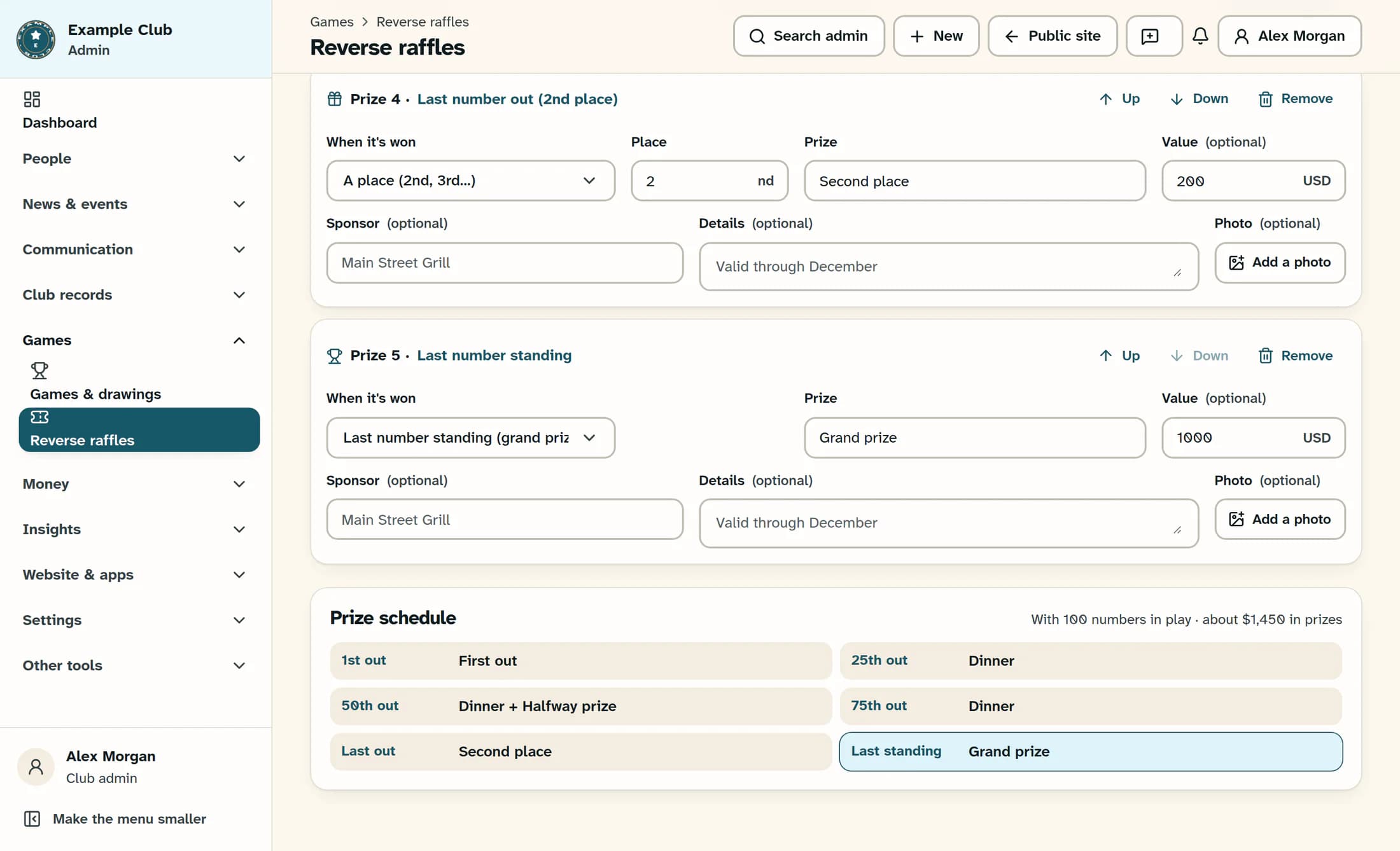
For an existing raffle, the Prizes tab shows the Prize schedule below the prize entries. In this fictional example, 100 numbers are in play: the first number out gets a $25 First out prize; every 25th number out gets a $50 Dinner; the 50th out also gets a $75 Halfway prize; the last out gets a $200 Second place prize; and the last standing gets a $1,000 Grand prize. The illustration reconstructs the screen from the product source using fictional data.
Out positions and standing places
First out means the first number eliminated, not ticket number 1. With 100 in play, the 99th number out is the last out and takes 2nd place; the one number left is the winner. A 3rd-place prize goes to the 98th number out, the third-to-last number standing.
What the preview tells you
The schedule expands recurring prizes into individual moments and displays up to 60 elimination rows, then adds a last-standing row separately when there is a grand prize. The amount shown is an estimate: it adds each non-recurring prize value even if its position is past the end, and counts each in-range recurring award. In this example it is about $1,450. The schedule reflects the current prize entries and board settings, not proof that a drawing happened, a winner was recorded or a prize was paid.
Review your raffle
Use the schedule to check when each prize is expected, then use the raffle’s draw history and result to review what actually happened. Prize entries can be changed in Prizes.